
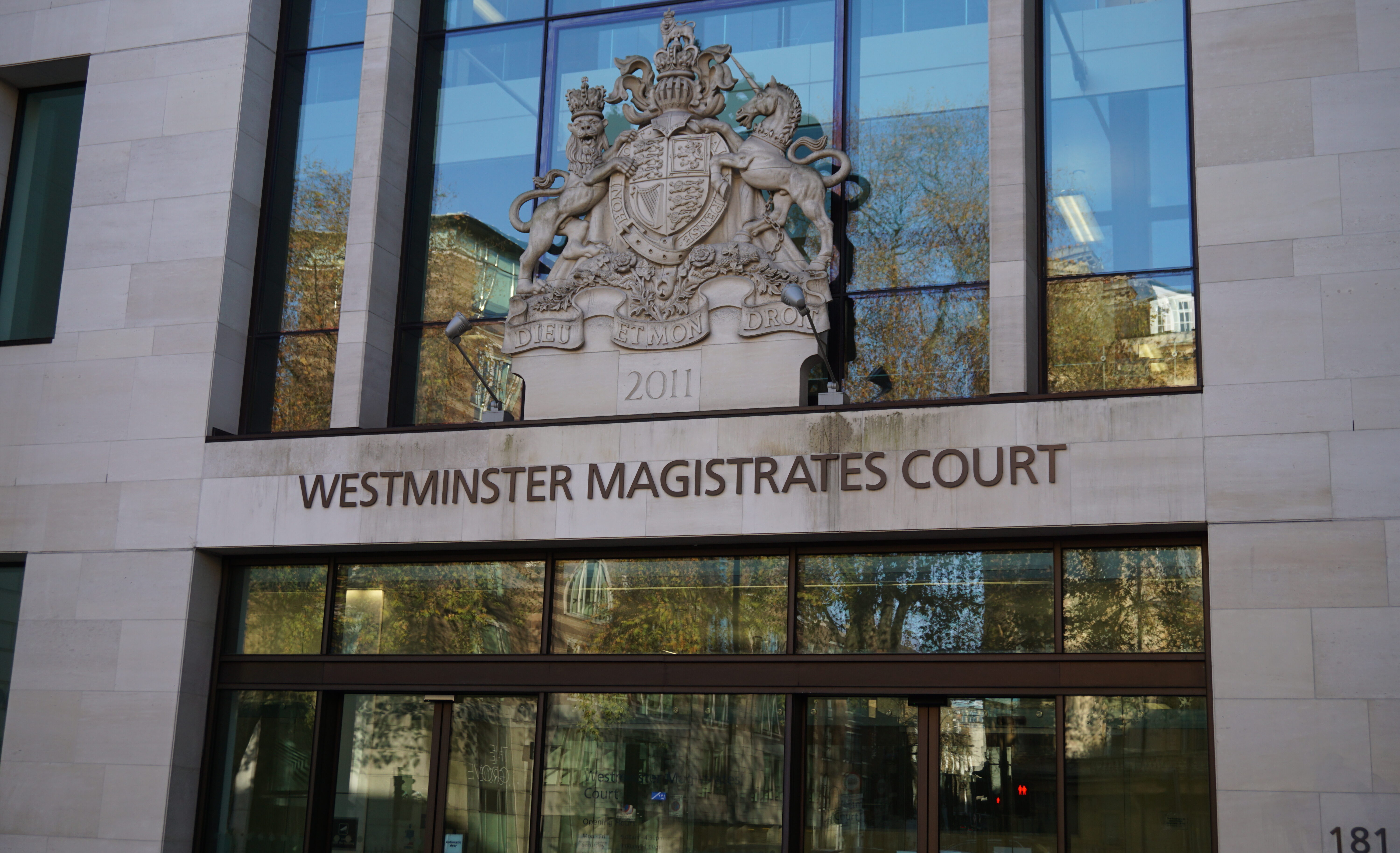
The tension between local and central services has played out in government over the last century. The management of the courts is a good example. This briefing gives an overview of how and why the administration of magistrates’ courts in England and Wales was centralised in 2003 and what implications that has had for local and other stakeholders.
Before 2003, magistrates’ courts were run by committees of local magistrates – magistrates’ courts committees. Each committee managed all the courts in their area with the help of a chief executive, and of a justice’s clerk, who advised on legal matters. The Auld Report 2001 recommended centralising the administration of all courts and this was implemented two years later.
Supporters of the centralised court service (HMCTS) say it has achieved economies of scale, provided more career opportunities for staff, enabled courts to work together better and brought about a more effective system of justice. Critics suggest that centralisation has led to: unnecessary court closures, the disempowerment of magistrates, the disappearance of the justices’ clerk as a powerful local figure, courts become distanced from local government, reduced local accountability and low morale among court staff. Since this report was published in 2013 magistrates’ courts have been further centralised through the abolition of local justice areas.
The tension between local and central services has played out in government over the last century. Ministers and their London based civil servants are keen to gain and maintain control over policy and how it is implemented. Local politicians and other stakeholders say central control doesn’t work and stifles innovation. There are many areas of justice which have see-sawed between local and central control, of which the administration of the courts is a good example. This briefing gives an overview of how and why the administration of magistrates’ courts in England and Wales was centralised in 2003 and what implications that has had for local and other stakeholders.
Before 2003, magistrates’ courts were run by committees of local magistrates – magistrates’ courts committees. Each committee managed all the courts in their area with the help of a chief executive, and of a justice’s clerk, who advised on legal matters. Funding came indirectly from Whitehall and directly from the local authority. The Auld Report 2001 suggested that this system was inefficient, ineffective and unaccountable and the government took on Auld’s recommendation to centralise the administration of all the courts. The centralised service later took on the management of tribunals too.
Supporters of the centralised court service (Her Majesty’s Courts and Tribunals Service) say it has achieved economies of scale, provided more career opportunities for staff, enabled courts to work together better and brought about a more effective system of justice. Critics suggest that centralisation has led to: unnecessary court closures, the disempowerment of magistrates, the disappearance of the justices’ clerk as a powerful local figure, courts become distanced from local government, reduced local accountability and low morale among court staff.
How should magistrates’ courts be run? It is worth at least considering the gains and losses of centralisation and potential models for re-localisation. There are three mainre-localisation options:
All options for re-localisation would need to incorporate means of preserving judicial independence in decision making and controlling listings. Re-localisation would be radical, given the highly centralised nature of the service now but, ten years on from the abolition of local administration, and with a new proposal to close courts looming, the time is right to assess the impact of centralisation and whether the intended benefits have been realised, and to offer a challenge to the status quo.
Why does the closure of every library inspire massive public protest while plans to close 142 local courts (put forward in 2010) prompted scarcely a whimper? Part of the answer might be that local people who use magistrates’ courts didn’t know the closures were going to happen. Another, that those who use courts are a very different group from the users of libraries.
But perhaps the most important reason for lack of protest is that local people, in the form of magistrates, local staff (justice’s clerks) and local authorities had lost their power to influence how the courts were run a decade before. The abolition of magistrates’ courts committees in 2003 deprived magistrates of power and influence. The consequent central employment of justice’s clerks led to a gradual diminution of a powerful local voice. Yet the implications of court closures for local justice are huge. The closure of courts means magistrates now often sit on cases, and don’t know the area in which the crime was committed or where the accused lives. Magistrates, victims, witnesses, defendants and police travel many extra hours to see justice done. And local people no longer have a visible symbol of the strength of the justice system in the midst of their community.
The closure of nearly a hundred magistrates’ courts at one fell swoop is a lasting example of the increasing centralisation of the court system and is unlikely to have happened at this scale had the administration of the courts remained local. But the Courts Act 2003 led to the dismantling of a centuries’ old system of local management of the courts by local authorities and local magistrates and the creation of a centralised agency to run courts administration from Whitehall.
Before 1949 local authorities managed the magistrates’ courts in their area. An administrator employed by the local authority, who sat in council offices, did day to day tasks while decisions on how to manage the court were made by councillors sitting in committee.
During the early decades of the 20th century the Justices of the Peace (JPs), who were part-time and untrained, came under increasing criticism as being amateurish and often unsuited for the task of dispensing justice. A Royal Commission on JPs, chaired by Lord DuParcq, reported in 1948. Though it strongly defended the position of the JP within the judicial system, it proposed that the administration of magistrates’ courts be modernised. The Commission also recommended that courts be staffed by barristers acting as full-time clerks, who could advise JPs in aspects of their work. Parliament implemented these and other recommendations in its Justices of the Peace Act of 1949.
The Justices of the Peace Act 1949 brought magistrates’ courts committees into being to administer the courts. Local authorities continued to fund magistrates’ courts, contributing 20% of the costs themselves and receiving 80% of the costs from the Home Office. The local authority delegated the management of the budget to the magistrates’ court committee (MCC). Apart from the justices’ clerk, all those sitting on the magistrates courts committee were magistrates and the committee was chaired by a magistrate. The MCC managed the budget, hired staff, including the justices’ clerk, organised training for magistrates and contracted services for all the courts in that area. From 1994, the MCC hired both a chief executive to run the courts (and sit on the MCC), and a justices’ clerk who gave legal advice to magistrates. Local magistrates gave their time voluntarily to sit on the MCC.
The move away from local management started well before 2003. In 1997 there were 105 MCCs, but they were soon reduced to 42 to match police areas.
MCCs were local in that the magistrates who sat on them were local residents, but MCCs were not truly representative of the wider local community or of criminal justice agencies. Other local stakeholders, including district judges, had little influence. The MCC had no representation from the local council (unless a councillor happened to be a JP) and none from court users. A more frequent criticism was of inefficiency – that MCCs had no incentive to save money, that their independence prevented economies of scale and that their practices were too diverse.
One of the first central government critics was a civil servant, Julian Le Vay, who in 1989 carried out a review of magistrates’ courts. He was concerned by lack of accountability as well as inefficiency in MCCs: “the (1949) Act left the justices’ clerk with responsibility for day to day running of courts and court offices, but did not make clear to whom he was answerable (if at all), now that he was appointed by a body separate from the bench he served. Nor was central Government given any say in the level or use of resources it was committed to provide.”1“Report of the Le Vay Efficiency Scrutiny of Magistrates’ Courts” (HMSO, 1989) para 3
Le Vay’s criticisms were echoed and quoted by Lord Justice Auld in his government commissioned “Review of the Criminal Courts of England and Wales” 2001. Auld added many criticisms of his own, including of MCC’s independence. “This results in inconsistency among themselves in implementation of national policy, in court practices and procedures and, indirectly, in local sentencing levels.” 2http://webarchive.nationalarchives.gov.uk/+/http://www.criminal-courts-review.org.uk/ccr-07.htm para 51He also referred to the funding system for MCCs as “cumbrous and inefficient, and their dependence on local authorities for their court and other accommodation can obstruct orderly planning and fail to make optimum use of court space.”3Para 51 Chapter 7
Auld advocated a centralised criminal court, eliminating the separate management and existence of magistrates’ and crown courts. Clearly this would require a centralised administration. But he still saw a role for local decision-making, recommending “an executive agency providing a national service, but with maximum delegation of managerial responsibility and control of resources of an accountable local manager working in close liaison with the professional and lay judiciary”.4Para 64
In the end, the Labour Government under Lord Irvine was not persuaded of the case for a single criminal court, but it did take on the idea of centralising the administration of the criminal courts and abolishing magistrates’ courts committees stating that “the current fragmented court framework was divisive, inefficient and lacked national accountability”.5http://www.publications.parliament.uk/pa/cm200203/cmselect/cmlcd/526/52604.htm#n1
In the “Justice for All” white paper (2002), the Lord Chancellor’s Department proposed a single courts organisation and cited the advantages as:
However the “Justice for All” paper emphasised the importance of keeping management of the courts local to some extent. The new agency “will build on the best attributes of both organisations to work to deliver decentralised management and local accountability within a national framework. The aim of the new agency will be to enable management decisions to be taken locally by community focussed local management boards, but within a strong national framework of standards and strategy direction”.6http://www.archive2.official-documents.co.uk/document/cm55/5563/5563.pdf
As the policy was translated into legislation and then implementation (via the Courts Act 2003), the community focus and local accountability were lost. Magistrates’ courts committees were abolished. A new centralised agency to manage all the courts and a number of new local boards and committees were created. The government in 2003 conceded the need to communicate with magistrates about key decisions regarding the courts and agreed a protocol attached to Section 21 of the Courts Act. Baroness Scotland in introducing this acknowledged “The partnership between judges, magistrates and the agency is fundamental to the work of the courts; therefore, good communication at all levels is essential…Our amendment offers magistrates a guarantee that they will be kept informed of matters affecting them, and they will be given the opportunity to give their views.”7http://www.judiciary.gov.uk/Resources/JCO/Documents/Protocols/Protocol%20under%20section%2021%20of%20the%20Courts%20Act%202003.pdf The problem with Baroness Scotland’s assurances is that magistrates were given no guarantee that their views would be acted upon. From having power to hire and fire, to set local priorities and policy, and to manage court spending, magistrates had to make do with information and consultation.
The statements and assurances of government ministers at the time suggested that they had no intention of radically reducing local accountability. Baroness Scotland wrote in 2003 “we rejected the model of a centralised agency in favour of greater local decision making and accountability across all the courts I cannot emphasize how much the Government is committed to local justice and to taking account of magistrates’ concerns”8Justice of the Peace (2003) 167 JPN 384 And Chris Leslie, who steered the Courts Bill through the commons as a junior minister, says the government had no intention of wiping out all local control over the courts. They thought that the newly created courts boards (see p09) would maintain local input. But in reality these new local forums had no levers of power and responsibility and ended up as merely “consultative” while financial power and accountability was assigned to the new centralised agency.
Why were ministers’ intentions not translated into policy and practice? Was the elimination of any real local power intended by some stakeholders, or did the legislation and its implementation accidently fail to express the desires of ministers? Further research would need to delve into the role played by civil servants, the drafters and scrutineers of the legislation, and those tasked with implementing it and the effect of a change in ministers.
Critics claim that the magistrates’ court committees were insular and extravagant, spending huge sums on staff, with some MCC chief executives commanding six figure salaries in 2001. Supporters say such salaries were rare and that most MCCs managed their budget efficiently and effectively. Unfortunately no independent research was done into the workings and management practices of MCCs, so we are reliant on conflicting anecdotes and a few facts. The annual report of the Gloucestershire MCC (the only example available online) for 2003 cites one member of staff in the £45-49,000 pay bracket and two in the £65-£69,000 range. The Gloucestershire MCC annual budget was £3.7 million.9http://www.gloucestershire.gov.uk/media/adobe_acrobat/f/s/Magistrates%20Courts%20Committee%20Anual%20Report%202002-03.pdf
The Courts Inspectorate inspected some MCCs on the eve of their demise. Many of the reports are very positive. South Yorkshire “clearly understands its strategic role and has shown effective leadership”10http://www.hmica.gov.uk/files/South_Yorkshire_Linked.pdf Hertfordshire “places commendable emphasis on corporate governance, and has shown leadership, not least in its early and sustained attention to equality and diversity”11http://www.hmica.gov.uk/files/Hertfordshire_linked.pdf and in Manchester:12http://www.hmica.gov.uk/files/Manchester_linked.pdf
“the Committee and senior officers have an excellent grasp of both national and local context, and the MCC is justifiably highly regarded for its contribution to inter-agency working.”
Maybe MCCs were axed just as they were becoming more effective? The mix of views from interviewees suggest MCCs were probably a mixed bag, with some pretty efficient, and others parochial and self serving.
Ironically some of those who served on MCCs cited central influence as one of the causes of their inefficiency. John Hosking, a businessman and JP chaired the Kent MCC 1984-88. This MCC wanted to extend a computer system operating in one court to the whole of Kent. The Home Office refused them the extra budget needed because a national IT system was in development (the later notorious Libra system). In reality, it took more than sixteen years for that national system to be developed, years in which Kent was hampered by less efficient and incompatible systems.
Those employed by MCCs contrast them positively with the current set up. David Simpson, a recently retired district judge who was, in the 1990s, a justice’s clerk in West London, said the old magistrate’s courts were like a family – everyone supported each other and staff were passionately loyal and committed to “their court”. David Simpson says the modern administration is impersonal and, to an extent, impenetrable. It is difficult to get hold of important bits of information, like the result of appeals. Staff move on frequently and appear de-motivated.
Some see the independence of local staff as a key factor in the desire of civil servants to centralise administration. Just as magistrates were independent of central government because they held the purse- strings locally, so local court staff were independent of the centre. Their loyalty was to the MCC, to its chief executive and to the justices’ clerk. justices’ clerks were often powerful local figures, who were not afraid to fight for their court, and who wielded huge influence over their bench and the MCC.
Magistrates’ courts committees were abolished in the 2003 Courts Act and dismantled over the following two years.
In hindsight it seems quite surprising that such a major weakening of magistrates’ power and responsibility was successful. No research has been done on the back story of the abolition of MCCs. Harry Mawdsley, who was Chairman of the Magistrates’ Association 2000-2003, says magistrates at the time were pre- occupied with their very existence. They feared the Auld report would recommend the abolition of lay magistrates and focussed on preventing that happening, rather than on preventing the abolition of MCCs. Magistrates courts committees and their representative body, the Central Council of Magistrates Courts Committees, did campaign fiercely against the changes, but the Council was separate from the Magistrates’ Association (MA), the most powerful advocacy body for magistrates. The opposition to the abolition of MCCs was insufficiently strong to stop it. Given the commitment in the “Justice for All” white paper and by Ministers to maintain local accountability, it is conceivable that MCCs and the MA did not understand until too late that this commitment was not translated into the Courts Act itself. They may have, mistakenly, thought that courts boards would be a worthy replacement for MCCs.
Magistrates’ courts are now run by Her Majesty’s Court and Tribunals Service. HMCTS is an agency of the Ministry of Justice run by a board chaired by Bob Ayling, formerly Chief Executive of British Airways. On the board sit senior staff members of HMCTS, two non executive members and three members of the judiciary – the Lord Chief Justice, the Head of Tribunals and a District Judge, Michael Walker. Accountability is to the board, and the board to the Lord Chancellor and the Senior Judiciary and, ultimately, to parliament. HMCTS is the result of a “merger” in April 2011 between Her Majesty’s Court Service (which was set up as a result of the Courts Act 2003) and the Tribunals Service. It runs all civil, criminal and family courts as well as all tribunals. All those who work for HMCTS are civil servants employed by the Ministry of Justice. There are 565 FTE staff working in an HQ function and 16,844 FTE working in the courts and tribunals themselves. Budgets are set centrally and allocated to each region.
Somehow coroner’s courts have been excluded from the reorganisation and centralisation imposed on magistrates’ courts. Their management is similar to that of magistrates’ courts before 1949. Though the coroner is a judge and the coroners’ court a court, the coroner is appointed and the service paid for by the local authority. Complaints about the coroners’ service go to the Local Government Ombudsman. Though an anomaly, no-one appears to be advocating a change to the system.
It’s hard to know whether the system costs more or less than it did before the Courts Act 2003. Lord Justice Auld suggested the administration of magistrates’ courts cost £330 million in 2001. Immediately after the abolition of the MCCs, it is likely that costs rose as the new Her Majesty’s Courts Service (HMCS) was created and staffed. But costs have reduced considerably in recent years as HMCS has been merged with the Tribunals service, as courts have been closed and sold off, and staffing, centrally and regionally, cut. In 2011/12 the administration of magistrates’ courts cost £283 million. Detailed current and historical data on the cost of managing the courts is hard to obtain. The only way of properly assessing the comparative costs of the administration of magistrates’ courts would be to compare costs per court hearing in say 1981, 2001, 2006 and today.
Having had immense power over the management of the courts, magistrates now have practically none, and the local community even less. Boards and committees performing different functions were set up by the Courts Act 2003, but none has the statutory powers enjoyed by the MCC and the “Justice for All” promise of creating “community focussed local management boards” was never realised. In addition, magistrates have been barred from sitting on many of the boards and committees which help run the current justice system. Committees and boards set up by the Courts Act 2003 or since were: courts boards, local criminal justice boards, community safety partnerships, area judicial forums and judicial issues groups.
The 2003 Courts Act set up courts boards, on which sat local magistrates and members of the local community. They were presented as a substitute to MCCs. Board members could comment on the future strategy, and budget of the court and were supposed to have a meeting with the community every year. But without any real power or influence, they were soon seen as a drain on resources, and in 2010, only five years after they first met, the Labour government moved to dissolve them. The Coalition agreed with this policy and, in the Public Bodies bill 2011, courts boards were abolished. The saving of an annual cost of £450,000 pa was one of the reasons given for their abolition. A sign of their lack of influence is that their axing happened without a public murmur, though they enjoyed some support – of 23 responses to the consultation on the abolition of court boards, many more were against abolition than in favour.
In discussing the Public Bodies bill in the House of Lords (April 2012) Lord Henley suggested that courts boards were unnecessary because other strong mechanisms exist for community and magistrate consultation citing a “strong local relationships between HMCTS and local magistrates’ Bench chairmen… As for engagement with members of the public, courts already use a variety of methods to engage with their local communities, such as open days, open justice week, representation at local community meetings, customer satisfaction surveys and mock trials. These methods provide more direct engagement with local communities than courts boards do”. Lord Beecham expressed concern that there was no current link between courts and local authorities to which Lord Henley responded:13http://www.publications.parliament.uk/pa/ld201212/ldhansrd/text/120425-gc0001.htm
“Courts and the wider criminal justice system certainly try to work hard and liaise with local authorities and local authority groups, and they will look at how they can improve that in due course”
Despite Lord Henley’s assurances, councillors and local government officials whom I interviewed felt that the relationship between HMCTS and local authorities was weak and had not improved in recent months. The House of Commons Justice Select Committee recently criticised the Ministry of Justice as a whole for its lack of local links “we have seen little compelling evidence of how it is seeking to engage with others within central Government, local government and the voluntary and private sectors. It will be essential for these different groups to work together more effectively, if momentum to transform the justice system is to be maintained”14http://www.publications.parliament.uk/pa/cm201213/cmselect/cmjust/97/97.pdf
Community safety partnerships (CSPs) are made up of representatives from the police and police authority, the local council, and the fire, health and probation services (the ‘responsible authorities’). Community safety partnerships were set up as statutory bodies under the Crime and Disorder Act 1998 “to work together to develop and implement strategies to protect their local communities from crime and to help people feel safe. They work out local approaches to deal with issues invcluding antisocial behaviour, drug or alcohol misuse and re-offending”.
They also work with other stakeholders, including community groups and registered social landlords. From 1998, magistrates sat on Community Safety Partnerships in some areas, but in May 2012 the Judicial Office sent out a circular preventing their participation:
“The Senior Presiding Judge has decided that it is inappropriate for magistrates to either be members of CSPs or to fulfil an administrative support (including liaison) function for a CSP as part of their employment or other activity”
These local forums provide an opportunity for all criminal justice agencies in a particular area to discuss issues which affect them. The CPS, Probation, HMCTS, the Police, Prisons, Probations, YOTs and the Legal Aid Agency are all represented. There are judicial representatives observing each board but magistrates are not members: “Each of the LCJB has a circuit judge from the local area as a point of liaison. The Judge is independent of the board itself but receives all the minutes and is encouraged to attend the meetings, especially when issues relating to the judiciary arise”15http://www.judiciary.gov.uk/about-the-judiciary/the-judiciary-in-detail/how-the-judiciary-is-governed/leadership-responsibilities#headingAnchor4
The Magistrates’ Liaison Judge chairs an Area Judicial Forum which deals with judicial matters in relation to the business of the magistrates’ courts, and co-ordinates with the crown court and other family courts.
These are consultative groups set up to discuss issues affecting magistrates’ courts in a particular area. Judicial Issues Groups (JIGs) were set up after the abolition of the MCCs and have a not dissimilar membership, and each is chaired by a magistrate. Like courts boards, their role is mainly consultative and they have no budgetary responsibility. JIGs discuss judicial matters such as listing, rota arrangements and case management. Lord Justice Gross, the new Senior Presiding Judge, recently hinted that the existence of JIGs and Area Judicial Forums may be up for review: “One of my concerns is that the correct structures are in place to support the proper conduct of business. In this regard, while understanding the historical need for bodies such as JIGs and AJFs, their future roles may call for re-examination”16https://judiciary.sut1.co.uk/docs/news/speeches/speech-gross-lj-nbcf-pdf
If Judicial Issues Groups were abolished, as courts boards have been, there would be no local structures left through which magistrates could influence the management of the courts they sit in.
Other developments caused by or affected by the centralisation of the courts system:
Before 2003 the justice’s clerk was a pivotal and powerful member of every magistrates’ court. He or she was appointed and employed by the MCC and sat on it. They ran the legal side of the court, organising listings, managing legal advisors and liaising with magistrates, district judges and the MCC staff. Many justice’s clerks went on to become chief executive of their local MCC. According to the Magistrates’ Blog, the clerk was in some ways the “patriarch” of the court “when I started the Clerk knew all of his staff and magistrates, and, as one of them said, was a cross between a butler and a family solicitor. He was technically employed by the magistrates, but everyone knew where they stood”17http://thelawwestofealingbroadway.blogspot.co.uk/2007/08/clerk-to-justices.html Since the 2003 Courts Act, justices’ clerks have been employed by a centralised agency, first HMCS then HMCTS. Their numbers have been cut from c200 in 1990s to 26 now. No-one has done a study of the demise of the justice’s clerk, but their changed employment status and shrinking numbers inevitably mean that many magistrates no longer have a close relationship with their clerk and certainly have no control over them. While the justices’ clerk used to work in a specific area and advise no more than 100 magistrates, they now cover a whole region containing many magistrates’ courts and are responsible for providing advice to up to 1000 magistrates.
Every town of any size used to have its own court, but the number of courts has been gradually reduced since 1900. Bigger court buildings have been built in our cities, containing many court rooms, and the efficiency of running a court just once or twice a week (as used to happen) has long been questioned. 143 courts were closed 1995-2003, many in the teeth of local opposition. But the 2010 proposal to close courts was unprecedented in suggesting so many should be closed within a short space of time. Her Majesty’s Court Service proposed that 142 courts be closed within two years. HMCS was under pressure to make huge savings and was aware that many court buildings were “under used”, partly because fewer people were being prosecuted, partly because processes had become more efficient.
HMCS consulted on all court closures and received a huge number of responses, most of which were negative. The Senior Presiding Judge, Lord Justice Goldring, expressed serious concerns about the impact of extra travel time to more distant courts and questioned the lack of detail in the consultation about court usage. But, considering the scale of the closures, there were comparatively few public protests. Maybe people didn’t understand that their court was about to close. Maybe they didn’t know to whom to protest or how. Three areas did however launch legal campaigns. The group in Sedgmoor in Somerset gave up their fight after issuing proceedings. Mike Dodden, former Chairman of the Sedgmoor Bench explained: “We got the feeling that although we had a strong case, the MoJ would find another way to close the court even if we succeeded. We didn’t feel they had taken note of anything we had said and we lost faith in the system.”18http://www.lawgazette.co.uk/news/magistrates-drop-legal-action-against-ministry-justice Two other areas -Sittingbourne in Kent and Barry in South Wales – took their cases to the High Court.They both lost because the judges felt that the process of decision making was legal, though in the Barry case Lord Justice Elias agreed that “there are powerful arguments in favour of retaining the court” 19http://www.guardian.co.uk/uk/2011/jun/16/legal-challenge-court-closures-rejected
Pressure to close courts continues. The Ministry of Justice is subject to some of the most stringent cuts in government over the last two years and some courts are still “under-used”. But objections to future closures are likely to be muted given campaigners’ lack of success so far.
Everyone in the system understands the need to save money and to make the court system work efficiently. But many magistrates were particularly frustrated by the court closure programme because they saw it as a lost opportunity to radically re-think the model of the magistrates’ court. Professor John Howson, a former deputy Chairman of the Magistrates’ Association, thinks that most magistrates’ business could be heard in a council chamber or a community centre (thereby keeping courts local), and that the panoply of expensive security measures in big court centres is unnecessary for most proceedings.
MCCs first began to be inspected as a result of the setting up of the Magistrates’ Court Services Inspectorate in 1994. Nine years later its remit was broadened to all courts. The remit of the new Inspectorate (HMICA) was “to inspect and report to the Lord Chancellor on the system that supports the carrying on of the business of the Crown, county and magistrates’ courts and the services provided for those courts”20http://hmica.gov.uk/files/HMICA_Who_We_Are_What_We_Do_2006.pdf Among the responsibilities of the HMICA were inspecting leadership and strategic management, public governance and accountability and quality of service. The Labour government, which had broadened the remit of the Inspectorate,, announced they intended to abolish it in 2009 and the current administration proceeded to dismantle it soon after winning the election. It was formally eradicated in the Public Bodies Bill 2010. The consultation proposed “although it was important to provide assurance, court systems were robust and properly regulated and this assurance could be provided within HMCTS”21http://www.justice.gov.uk/downloads/consultations/consultation-public-bodies-bill.pdf When the courts inspectorate was abolished, the scrutiny of courts administration was inevitably reduced.
The current system whereby magistrates’ courts are managed by HMCTS provokes little public comment. But interviews with magistrates, district judges and court staff suggest disadvantages of the current centralised approach:
Many magistrates who remember the old MCC system would like to go back to it. They realise that it gave magistrates considerable power and control over the court in which they sat, and magistrates believe it was exercised quite wisely. Some magistrates now feel they are treated as “hired hands”, expected to give their time and comply with new policy, but with few channels available to them to shape that policy.
Four particular grievances illustrate how they feel disempowered:
Court closures
Magistrates feel that they had little influence over the most recent court closure programme and are broadly unhappy about it. John Thornhill, then Chairman of the Magistrates’ Association described the changes as “taking away local justice from the communities where that justice should take place”. Magistrates feel that the closures have contributed to a weakening of the connection between each bench and its local community, to benches becoming too big and, practically, to magistrates having to travel far greater distances to sit in court, attend meetings and training. The court closures over which MCCs presided in 1990s are seen differently, partly because they happened so long ago, partly because decisions were made locally.
Lack of local discretion over budgets
Under MCCs, magistrates’ expenses would be paid from the MCC budget and magistrates who needed extra expenses (over and above the normal daily rate) to attend training, conferences etc would apply to their local MCC. Presumably some requests were turned down, but there was no evident resentment. In recent years, magistrates have complained bitterly that most requests for expenses to go to conferences or non statutory training have been turned down, due to pressure on budgets. It is not so much the lack of financial recompense that aggrieves magistrates, but the impression given of a disempowering bureaucracy that makes them feel undervalued.
District Judges
Magistrates feel aggrieved by the appointment of district judges, particularly given that their own workload has reduced and many magistrates cannot do sufficient sittings (eg in the Youth Court) to be confident of remaining on top of current law and practice. The dispute about district judges is long standing and complex. What’s important now is that magistrates feel they have no influence as to whether a district judge is appointed in their area, whereas previously they did.
Lack of representation on HMCTS board
There has never been a magistrate on the HMCS or HMCTS board, though there has always been judicial representation. The Magistrates’ Association would like to have the lay magistracy (not necessarily the MA itself) represented on the board, just as a lay magistrate has a seat on the board of the Sentencing Council.
We don’t know what effect this feeling of disempowerment is having on the recruitment and retention of magistrates, because the data is not available. But there is certainly resentment among some magistrates that their views and experience are not respected.
Many of the public servants who use the magistrates’ court are based in local authorities, or in regional centres. YOTs, social workers and community safety teams are based in local authorities and have regular business in the court. Court users are also reliant on housing, education and intensive family support services, which are based in local authorities. Police and probation areas have far larger geographical footprints but, in each case, officers are frequently located in mini hubs in the same towns and cities as local authority staff. But the central organisation of the courts means that court staff are not closely linked in to local services and may be located miles from the court users’ local authority. There are few boards or committees on which both representatives of local criminal justice agencies and local authority services sit. And local agencies have virtually no mechanisms through which to influence the management of the courts in their local area.
Local communities are almost completely divorced from their courts. Many people do not know where their nearest magistrates’, family or civil court is, and they have no ownership of, or involvement in, courts except occasionally as users. Courts boards were supposed to include and engage local people, but there were usually only two on each board and it is not clear whether vacancies were widely advertised. Today, the invisibility of courts to most members of the community can only exacerbate lack of confidence in and understanding of the criminal justice system. The best way of increasing confidence is to give people a real and meaningful stake in the system. It is a sign of how disconnected courts are from the wider community that so few people know that court proceedings are open to the public.
This is in contrast to some other jurisdictions. The USA has pioneered close links between community and court. The San Francisco Community Justice Center has an advisory board which meets monthly and holds a community Town Hall meeting bi-monthly. It is chaired by the judge and the Center’s co-ordinator and is composed of representatives of community based organisations as well as the agencies that serve the court. Community courts have spread throughout the world. At the Neighbourhood Justice Center in Collingwood, Melbourne, Australia, the Advisory Group is actively involved in circulating information, in initiating and participating in research and in hosting activities such as Talking Justice, a series of community conversations 22http://www.courtinnovation.org/research/community-courts-around-world
The government is promoting neighbourhood justice panels as part of a “government commitment to open up and increase community involvement in justice”. Neighbourhood justice panels bring local victims, offenders and criminal justice professionals together to agree what action should be taken to deal with certain types of low level crime and disorder. They can be set up by local criminal justice agencies and/or the local authority and can deal with offences that might otherwise go to a magistrates’ court. They can deal with anti-social or criminal behaviour that is “not serious enough to merit more formal action”, or with criminal offences that will or have resulted in an out of court disposal. Given the huge discretion available to the agencies to proceed to more formal action or to use out of court disposals, it is inevitable that many of the cases dealt with by the panels could be dealt with in magistrates’ courts and vice versa. Yet there is no structural link between the two systems. The Crown Prosecution Service will sometimes (but not always) be the middleman, deciding whether a case should be referred to a panel, diverted or prosecuted formally. Magistrates may be involved in eighbourhood justice panels, as volunteer mediators. But the two systems are geographically, administratively, structurally and culturally miles apart. As neighbourhood justice panels are set up, this gulf between the two systems may strain the coherence of the justice system overall, particularly if other moves are made to expand restorative justice and put it on a statutory local footing.
There are few recent examples of innovative practice in the way courts are run but, under Labour, a community court, modelled on Redhook in New York, was established in North Liverpool in 2005. It introduced a single judge for all cases, new ways of listing, a new way of handling cases and a new approach to integrating local services. It struggles on, but the original judge has moved on and few services are currently located in the court. Within a centralised administration, it is difficult for local innovation to flourish. Strategy is set by the HMCTS board and decisions on spending made in the centre. Nearly all the innovations that have been introduced to courts in the last ten years (drug courts, domestic violence courts, community courts) have been conceived and directed from the centre. These ideas all came from the USA where courts are managed locally and where judges have huge discretion to innovate and run things their own way. While courts in England and Wales are run centrally, it is questionable how innovative they can be. Central administration tends to lead to a culture of conformity and obedience to bureaucracy. The 2012 HMCTS staff survey found that only 19% of staff think changes made in HMCTS are usually for the better and only a third feel it is safe to challenge the way things are done in HMCTS.23http://www.justice.gov.uk/downloads/information-access-rights/transparency-data/moj/hmcts-people-survey-highlight-report-pdf
Her Majesty’s Courts and Tribunals Service (HMCTS) “was launched with the specific aim, set by the Lord Chancellor and Lord Chief Justice, of running an efficient and effective courts and tribunals system which enables the rule of law to be upheld and provides access to justice for all”24http://www.official-documents.gov.uk/document/hc1213/hc03/0323/0323.pdf It is not among HMCTS’s current aims to provide local justice and to enable local people, practitioners and magistrates to have influence or control over the way courts are run. So it is not fair to judge it against these criteria. But localisation could make the courts more accountable, more trusted and more innovative in their approach.
If government were minded to reform the system, there are various ways in which local people and communities could be given a real stake in the management of the courts:
Crown courts, civil courts and tribunals would continue to be managed as now, but magistrates’ courts would have more power and responsibility devolved to them at local level. Each court or group of courts would manage their own budget, make decisions about resource allocation, and hire staff. A national “framework” strategy would still be set by the Ministry of Justice and HMCTS. However decisions on how to implement policy locally would be taken by a board made up of magistrates, staff, a local district judge and representatives of the local community (maybe the chair of the community safety committee of the local authority and/or the PCC). This structure would have similarities to the old magistrates’ courts committees but with key differences – the board would have a broader base through including local people and a district judge, and HMCTS would set overall strategy and allocate budgets to each area. Each court would have freedom to innovate, as long as changes did not compromise judicial independence. The boards would have more power and responsibility than had courts boards, and would not be purely consultative.
Not every local authority has a magistrates’ court in it, but those authorities which did, would manage the administration of the court, as they do coroners’ courts. National strategy would still be set by the HMCTS and the Judiciary but court administrative staff would work for the local authority. Strategic local decisions on administrative matters would be made by the local councillors sitting in committee. Budgets would be delegated from Whitehall to the local authority. The set up would be similar to that for public health and schools, where national strategy is set by Whitehall departments but decisions on resource allocation and implementation are made locally.
There are one or more magistrates’ courts in every police and crime commissioner (PCC) area. The Home Office has set the role: “Police and crime commissioners will ensure community needs are met as effectively as possible, and will improve local relationships through building confidence and restoring trust. They will also work in partnership across a range of agencies at local and national level to ensure there is a unified approach to preventing and reducing crime”25http://www.apccs.police.uk/page/Role%20of%20the%20PCC PCCs are already managing budgets for the police, for victims’ services, and for crime prevention. PCCs could take on the administration of the courts as in the model above for local authorities. In order to give local magistrates some influence in the management of the courts, each Police and Crime Panel (set up to “scrutinise the actions and decisions of each PCC and make sure information is available for the public”) should have either two magistrates, or one magistrate and one district judge on it. Under this model, it would make sense for the management of the Crown Prosucution Service (CPS) in each area to be delegated to the PCC, though overall policy would still be set by CPS headquarters. Judicial independence would be strictly maintained through observance of a nationally agreed protocol.
There is no “golden age” when the local community had a close involvement in and responsibility for the management of the courts in England and Wales. But when every local authority handled the budget and contributed 20% of court costs, local stakeholders had more ownership of and involvement in their courts. And before 2003 the local community, as represented by local magistrates, controlled the administration of local magistrates’ courts. The Auld report led to a removal of all real local power over magistrates’ courts, either by the local authority or by magistrates themselves. Since then, the localisation agenda has led to some parts of the criminal justice system, such as the police, increasing their local accountability while, arguably, with court closures and the abolition of courts boards, courts have become less accountable to local people or local government.
Why change the status quo? There is no public clamouring for more control over the courts. The court closure programme is a done deal. But there are problems in the system at the moment. Magistrates, who preside over most criminal cases, feel increasingly bitter that they have no means of influencing how courts are run. More importantly, there is a lack of community involvement in and interest in their local courts. This contributes to lack of understanding of and confidence in the criminal justice system. In addition, central control tends to stifle local innovation and reduce the motivation of local staff.
Some also feel that HMCTS is insufficiently accountable. It is run by a board, which is in turn overseen by the Judiciary and the Ministry of Justice, but there is no close democratic or local oversight and few mechanisms for scrutiny, particularly since the courts inspectorate was abolished. And there is no lay magistrate on the HMCTS board, to represent the experience of the 25,000 magistrates in England and Wales.
Penelope Gibbs talked to the following as part of her research but the views in this pamphlet are of course her own
John Fassenfelt
Chairman, Magistrates’ Association
Chris Stanley
Magistrate and trustee Transform Justice
Chris Jennings
HMCTS
Sean McNally
Legal Aid Agency
Ian Magee
former Chief Executive of the Courts Service
Prof. John Howson
former Deputy Chairman Magistrates’ Association
John Hosking
former Chairman, Magistrates’ Association
Mark Ormerod
Senior Official in Department for Constitutional Affairs 1996-1999
Sally Field
Senior Official, Ministry of Justice 1998-2010
Philip Evans
Deputy Chair, LGA Safer and Stronger Communities Board
Harry Mawdsley
former Chairman, Magistrates’ Association
David Simpson
retired District Judge and Justices’ Clerk
Bryan Gibson
Waterside Press, former Justices’ Clerk
Chris Leslie
MP, former Minister in The Department for Constitutional Affairs
Lord Beecham
House of Lords, Shadow front bench team Justice and DCLG (Department for Communities and Local Government)
Transform Justice
43 Lawford Road London NW5 2LG
[email protected]